Health cover still a ‘push product’ for Bengaluru workforce
- April 15, 2026
- Posted by: peakalpha2023
- Categories: Deccan Herald, Financial planning, Health Insurance, Risk management
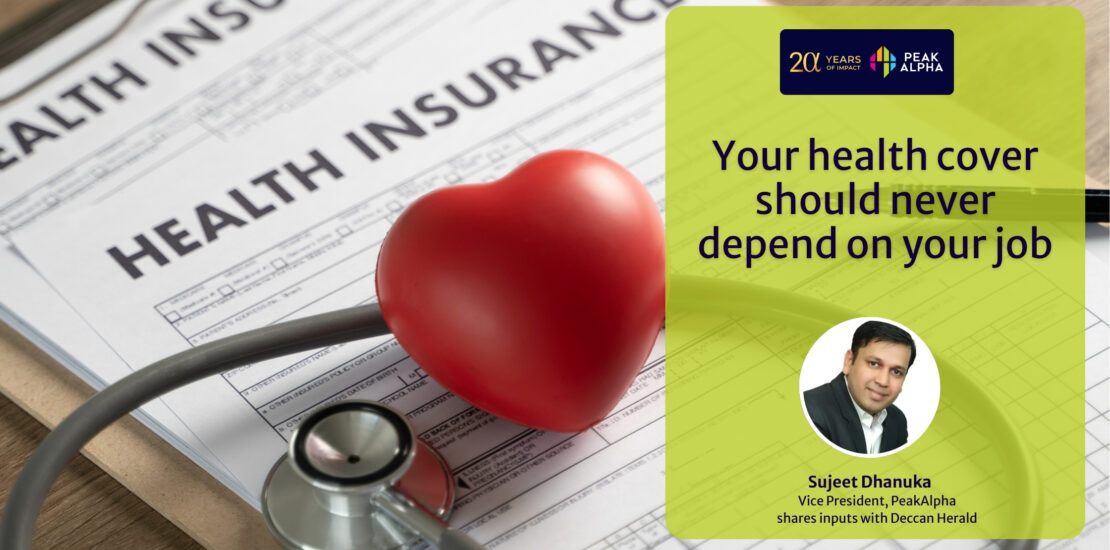
Experts say most people buy personal insurance in their 40s and 50s, when health risks rise and incomes are more stable.
Written by Barkha Kumari for Deccan Herald, 3 April 2026, with inputs from Sujeet Dhanuka, Vice President, PeakAlpha
Experts have seen a marginal increase in the adoption of personal health policy since the pandemic. Most working professionals see personal health insurance as an unnecessary expense, say financial advisors in Bengaluru.The belief that no sickness will befall them is stronger among younger people, who think they are investing more of their time and money on fitness than previous generations.
Entrepreneur Nithin Kamath reignited the discussion recently. On X, he wrote that he was “genuinely surprised” by how many people rely only on employer health cover and never buy a personal policy.
Experts told Metrolife that personal health insurance in India has long been a “push product”, with low demand. However, attitudes are slowly changing due to rising medical costs and uncertainties exposed by the pandemic.
People’s POV
Kritika Iyer, 28, does not have health insurance. “My previous company provided coverage, but I am currently working with a small startup that doesn’t offer benefits yet. I am thinking of getting a policy, but there is no urgency. You act on such matters only when there is a trigger,” she says.
Jatin (name changed), 55, recalls the trigger that led him to buy a Rs 10 lakh family plan two months ago. “My brother-in-law had a stroke. He is retired but had personal insurance, which covered two surgeries costing Rs 8 lakh in total,” says the media professional. Jatin is close to retirement and felt it was the right time to act. Kavita Udasi, 50, chose to act early. “Corporate jobs are insecure. If you lose your job, you lose health cover immediately,” says the executive assistant at a firm.
Widen cover
Experts say most people buy personal insurance in their 40s and 50s, when health risks rise and incomes are more stable. But Rahul Jaiswal, director at Eazyinsure, says employer cover has not kept pace with medical inflation in India. ““Most plans offer a cover of around Rs 5-6 lakh, while medical costs are rising at about 14% a year. A surgery that cost Rs 1 lakh five years ago now costs roughly Rs 2.5 lakh,” he says. One major health event can push a person into “bankruptcy” if they are underinsured.
Sujeet Dhanuka, vice president at PeakAlpha Investment Services, says personal health insurance should be seen as a low-cost, high-impact part of financial planning. Without it, people may be forced to dip into savings during emergencies, which can derail long-term goals. Giving an example, he says, money meant for a child’s education abroad can be wiped out by a Rs 16 lakh hospital bill. Govardhan G from Tata AIA Life Insurance says most buyers of personal health insurance are business owners and the self-employed. They make up 50-60% of the segment, versus 4-5% salaried professionals. However, this is changing after Covid-19. Earlier, sales agents sold 2-3 such policies a month but now the number has risen to 6-10. They are also seeing adoption from buyers as young as 32.
Prabhakar K S, founder and CEO of Shree Tax Chambers, cites two key reasons for the recent uptick in the adoption of personal health insurance. “With ‘0’ or ‘nil’ GST rates, individual health and life insurance policies have become more affordable than ever. In addition, the Union Budget 2026-27 assures the continuation of the old optional tax regime for a few more years. Taxpayers who had shifted to the new default regime are now being encouraged to return to the old regime, invest in individual policies, and avail of income tax benefits,” he explains.
Reiterating the importance of insuring one’s life on personal terms, Prabhakar also points to the recent layoff of 12,000 Indian employees by Oracle. “Those who relied solely on employer-provided insurance will now be at a great disadvantage,” he notes.
What to do
Aim for a cover of Rs 15 to Rs 25 lakh, including personal and employer policies.
Buy a personal policy as soon as you start working. Dhanuka says insurers now have stricter eligibility checks, and even people in their 30s may face issues due to conditions like high blood pressure or tobacco use. He adds that some insurers now allow you to lock in premiums until the first claim. This means, you don’t have to pay more with age. Premiums have doubled in the past four years, Jaiswal points out.